

Fire Tank Monitoring for Bushfires
Smart City and Emergency Management - City of Busselton, Australia
The Challenge
The City of Busselton is a fast-growing municipality in Western Australia, covering large areas of farming land, native forest and residential zones. Local fire response relies on volunteer brigades, hydrants and a dispersed network of firefighting water tanks that are topped up through water cartage, pumps and roof runoff. As hotter, drier conditions increase bushfire risk, the City needed to be certain those tanks actually held water when a brigade needed them.
Several problems stood in the way: Limited operational visibility of more than 40 tanks spread across a wide, mixed-terrain area, high manual inspection effort, risk of undetected water loss, and connectivity across remote areas without fitting a cellular connection to every single site.
The Solution
The City of Busselton partnered with Milesight and Connectiva, a Western Australia-based IoT specialist, to build a city-wide water-asset monitoring solution, running OpenRemote underneath as the asset management, rules and dashboard engine. Out in the field, 42 long-life, battery-powered EM500-SWL submersible sensors report tank depth. A further EM500-CO2 sensor monitors CO2 levels as an early indicator of fire activity, adding a layer of environmental awareness alongside the water data.
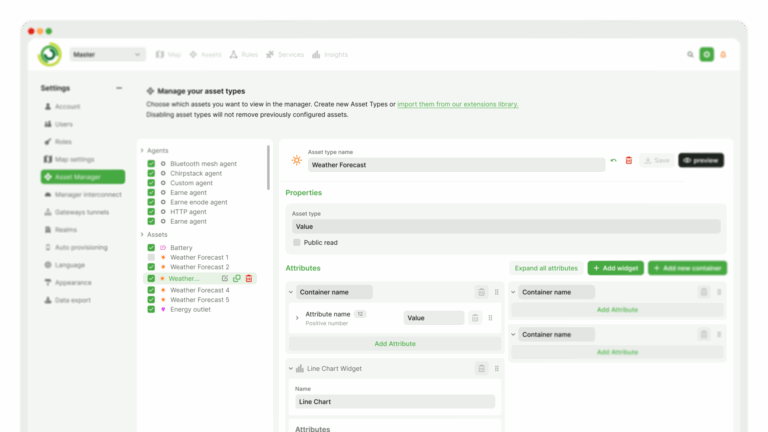
Each of the 40+ tanks becomes a digital asset in OpenRemote, bringing location, capacity, level, telemetry, device health, user access and event history together in one operational view. Configurable rules flag unusual usage, leaks, unauthorised access or abnormal drawdown, and notify council staff, brigades or contractors automatically rather than waiting for someone to spot the problem on a routine visit. Because the data lives in an open platform rather than a closed sensor feed, it can be pushed to in-vehicle tablets, overlaid with hydrant locations, and extended into broader emergency-response workflows as the City’s needs evolve.
Results
Connecting more than 40 sites across farmland, forest and residential areas would normally mean a cellular subscription per tank, which adds up fast and doesn’t always reach the more remote sites. Instead, eight UG65 (indoor) and UG67 (outdoor) LoRaWAN gateways provide shared, long-range, low-power connectivity across the whole region. That shared network also leaves spare capacity for future sensors, so extending coverage later doesn’t mean laying new infrastructure.
The City now has near real-time, centralised visibility of its firefighting water tanks, giving council and brigades a shared, up-to-date picture of available water sources instead of a patchwork of site visits.
Industrial IoT
Seamlessly connect your machines to the cloud with OpenRemote. Our platform supports diverse protocols as well as running our edge gateway on site, making it easier to integrate both legacy systems and modern industrial equipment. Monitor and optimise machine data in real time on site, gain insights into operational performance remotely, manage devices, and 3rd party local systems such as PLCs or SCADA, across multiple locations through a single dashboard.