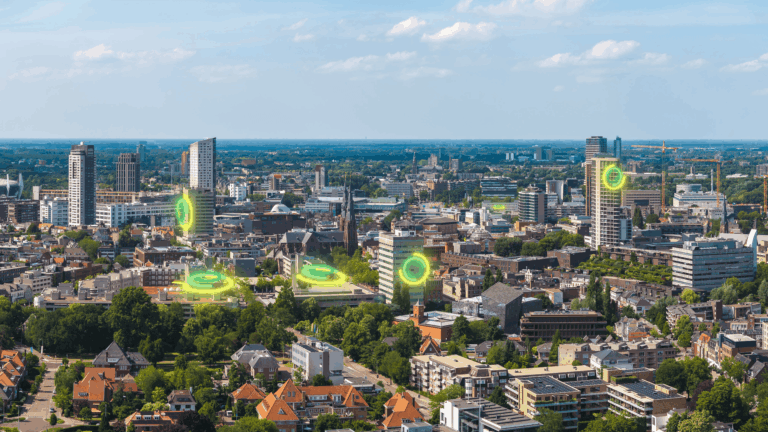
OpenRemote is an open source IoT platform used by organisations responsible for keeping people and places safe. Connect any sensor, gateway or operational system, monitor critical assets in real time, and alert the right responders before an incident escalates. It is used by municipalities, police, emergency services and operators of critical sites such as airports and transport hubs.
Public safety depends on information that is isolated across many systems. Some examples are water tanks in the wilderness, sensors on street furniture, gateways in remote areas. OpenRemote brings this data together in one environment, regardless of brand or protocol, so operators and first responders share the same real-time data.
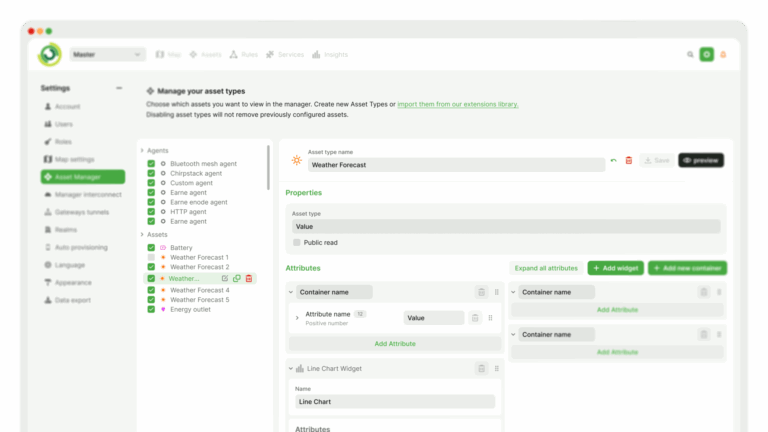
Every sensor, tank, checkpoint or gateway becomes a digital asset with its location, live metrics, device health, user access and event history. Assets appear on a map, in dashboards and in mobile apps, and stay under your control: deploy in the cloud, on-premises, or fully inside your own secure environment.
OpenRemote supports LoRaWAN, MQTT, HTTP, Modbus, SNMP and more through configurable agents or the OpenRemote Edge Gateway. Users can see every asset, alarm and responder in context on a live map.

The sooner a deviation from the baseline is noticed, the more time responders have. OpenRemote combines live sensor data with history, forecasts and external data sources to detect what is out of the ordinary: a water tank that drains without being commanded to do so, a rising CO2 level that may signal a fire has started, or an abnormal chemical or radiological reading in a public space.
Domain models run directly on the platform. For CBRN-E monitoring, for example, readings from distributed sensor nodes can be combined with weather data and a pollutant dispersion model, to estimate where a release originated and where it is heading. This estimate can then be used by the authorities in real time to investigate the localized source.
With OpenRemote’s integrated rules engine, you can define, without code, what happens when a KPI is flagged: notify council staff, alert a fire brigade, or alert a rapid response team.
Alarms are prioritized by severity and assigned to the responsible team. Deployed units can get the information they need in a mobile app, while control rooms monitor the situation from specially-crafted Insights dashboards.
Every reading, alarm and action is stored, so you can review incidents afterwards, compare locations and time periods, and improve procedures. With the Insights page, users compare assets and periods and define their own KPIs, such as asset availability or CO2 emissions.
Historic data can be used to simulate worst case scenarios and support preparedness. Users can test emergency scenarios, plan resources and train teams on realistic data before a real incident occurs.
Choose how you want to get started: let our service team deliver a complete IoT solution for your organisation, or build it yourself using the open source code and documentation. Have a look at the [quick start guide] to set up your first project.