








FIRAN Contributes Grid Control Platform to OpenRemote
Nov 12, 2026 | Press
When the organisation behind a piece of software decides to step back, the software usually goes with it. Servers get switched off, the code ends up in an archive, and the customers who relied on it start looking for something new.
FIRAN, the Dutch expert in distributed energy networks, did it differently with its Grid Control Platform (GCP). Kersten Techniek takes over the operational customer sites that run on it migrating them to Motus. The functionality FIRAN built over the past years is contributed to OpenRemote, so it stays open source and available to anyone who wants to use it.
Built when nobody was selling it yet
FIRAN is part of the Alliander group and works on local energy systems within Alliander Next Grid. Around 2018, grid congestion in the Netherlands was turning from a theoretical risk into a daily problem for businesses. What was missing was software to manage energy flows on site. There was hardly a market for it.
So FIRAN built one. The GCP went live at a series of customers, where it steered generation, storage and consumption in real operations, not in a lab.
Six or seven years later the picture has changed. Energy management systems are now offered by plenty of commercial parties, and running them has become a regular technical service. For FIRAN, whose job is to get things moving where the market isn’t ready yet, that was the signal to hand it over.
OpenRemote keeps it open source
The handover has two parts. Kersten Techniek, an installation and engineering company with a lot of hands on operational experience, takes responsibility for the operational customer sites. Those customers move onto Motus EMS, Kersten’s energy management system.
Motus EMS runs on OpenRemote. That made the second part possible: FIRAN is transferring GCP functionality into the OpenRemote platform itself. Existing customers keep what they had. Everyone else using OpenRemote can use it too.
For FIRAN, open source was a condition for the deal. Joeri Kramer, Lead Operations at FIRAN, put it simply in an interview with Kersten: “The product is really everyone’s.” Kersten and OpenRemote provide the service and maintenance needed for a stable system, but nobody gets locked in.
What’s added into OpenRemote
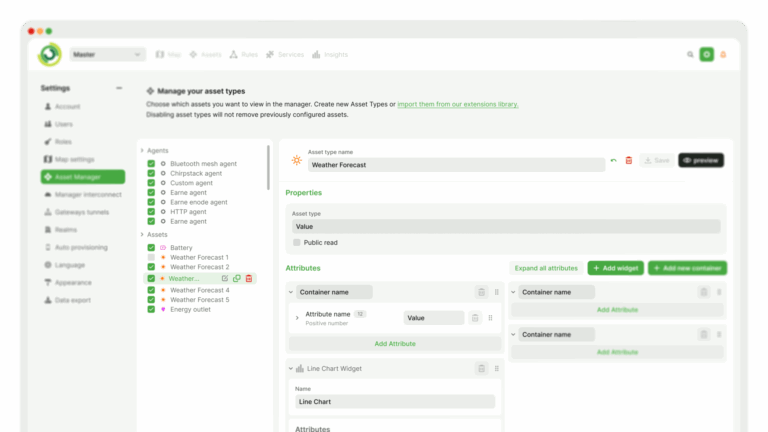
The GCP was built for businesses dealing with limited grid capacity, and that shows in what it can do. Three areas stand out: connections to energy markets and external market parties, forecasting of production and demand, and battery optimisation. If you are interested in more details, check out the OpenRemote extensions.
On their own, none of these is new. Many features were already present in OpenRemote’s EMS extension. However FIRAN contribution has put it at the next level. In addition we have been able to extend the notitification functionality within OpenRemote, an essential part to optimise the installation and maintenance workkflows for system integrators.
In Motus EMS, Kersten takes OpenRemote further by including heat, cold and storage alongside electricity. What starts at one site can later grow into shared generation with neighbouring businesses, or an energy hub.
Why we care about this one
We see energy management software moving closer to the core of how companies operate. When a battery or a charging plaza depends on it, the software has to keep working for years, much like the cables in the ground. That is hard to promise when the code belongs to a single company that might change course.
Open source doesn’t solve everything, but it does mean the work can be handed on. This handover is a good example of that. FIRAN stepped back, Kersten stepped in, and the code stays available fully open source for the next integrator, grid operator or energy community that needs it.
If you work on flexibility, congestion management or local energy systems and want to try OpenRemote out or help build on top of it, get in touch or just get started.